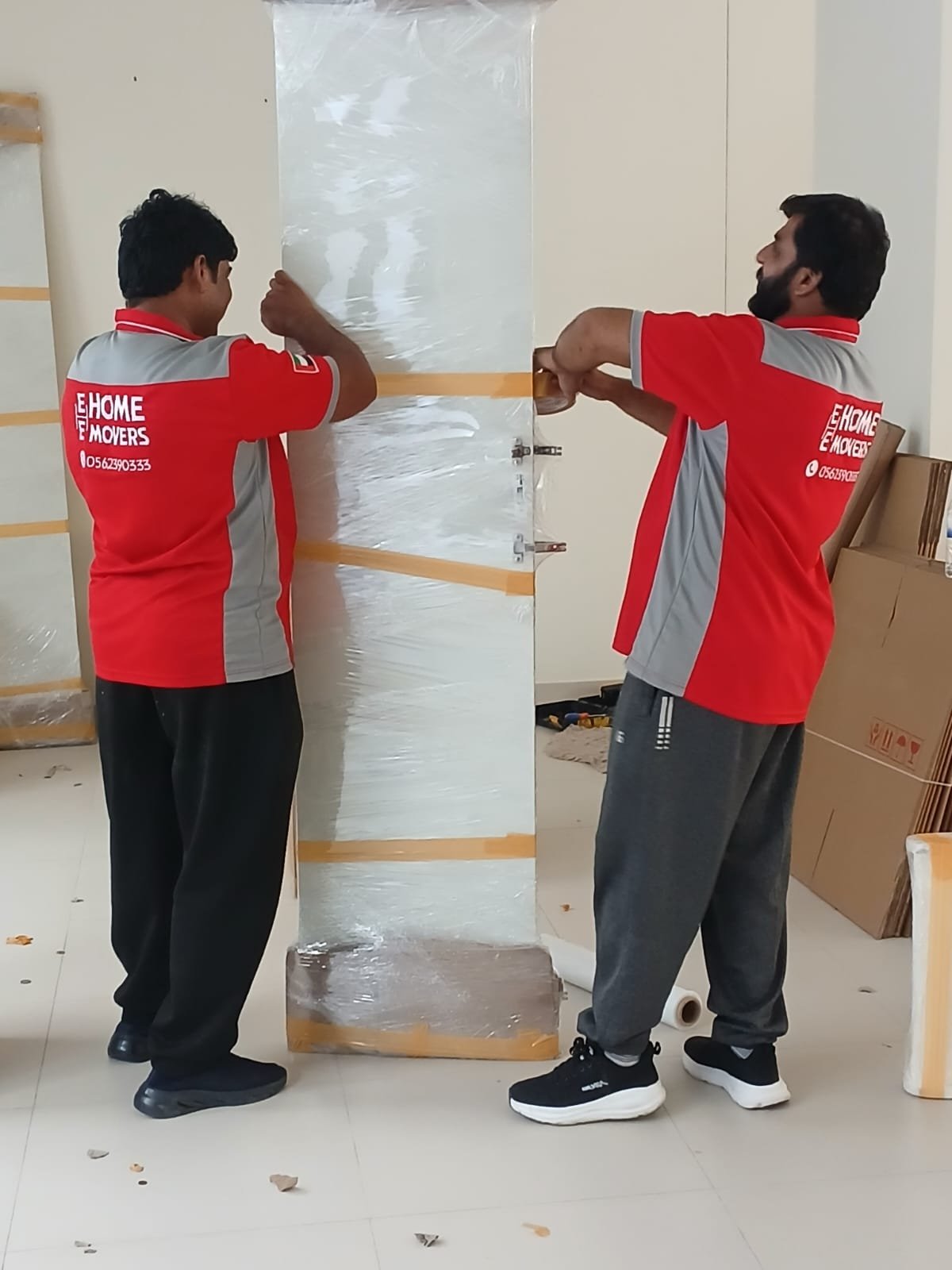
A marble dining table cracks from uneven pressure and unsupported flex, not from a single dramatic drop. Most damage happens quietly, during a lift where the weight isn't evenly distributed, or in transit where the slab isn't fully supported along its length. Get those two things right and a marble table moves safely.
Marble is heavy and dense, but it has almost no flexibility. Wood can bend slightly under stress and glass is manufactured with predictable stress points, but marble is a natural stone with internal variations invisible to the eye, veins, tiny fissures, and density changes that make every slab behave a little differently under pressure.
A table that's sat perfectly still for ten years can still crack the first time it's lifted incorrectly, since the stress it experiences during a move is often nothing like the stress it experiences sitting flat on four legs. This is exactly the kind of detail worth flagging during the survey to villa movers in Dubai who handle marble and fragile furniture, since marble dining sets are common enough in villa homes that an experienced crew should already ask about them.
Most marble dining tables have a top that sits on the base rather than being permanently fixed, and separating the two before moving anything reduces risk more than any other single step.
Moving the slab on its own means each carry is lighter and easier to control than lifting the whole assembled table at once.
A wooden or metal base was never designed to be moved while carrying the full weight of the slab, and separating them removes that risk entirely.
Top and base can be wrapped and protected separately, rather than trying to cushion one awkward combined shape.
Corners and edges are where marble chips and cracks start, since these are the thinnest, most exposed points on the entire slab. Foam corner guards, taped securely rather than just rested in place, and a full wrap of moving blankets across the whole surface, not just the edges, genuinely reduce the risk here.
A blanket wrapped only around the outer edge leaves the flat top and underside exposed to scratching and impact from anything else stacked nearby during transport. This same padding discipline applies whether the table is coming out of a villa or a high-rise unit, which is why our apartment movers in Dubai for fragile and heavy furniture follow the identical wrapping process regardless of property type.
Adding more people to a lift only helps if everyone is actually supporting the slab evenly. Two people lifting from opposite corners while the middle sags unsupported puts real stress through the centre of the table, and this is often where a crack that seemed to appear "for no reason" actually started.
The correct approach is full-length support along both long edges, with everyone lifting and setting down in the same motion at the same time, not staggered. Standard dining slabs for six to eight seats are genuinely heavy, often well over 100 kilograms, and this isn't a job to underestimate with an informal group of friends. A crew used to handling stone furniture brings both the numbers and the coordination that a one-off group lift usually lacks, which matters just as much for a beachfront villa as any other property, and it's a routine part of the job for our movers and packers in Palm Jumeirah experienced with luxury villa furniture, given how common marble pieces are in that community specifically.
Both positions, flat or on edge, are used in practice, and the right choice depends on the slab's thickness and how it's being supported inside the vehicle. What matters far more than the position itself is continuous support along the full length of the table, not just support at the two ends.
A slab resting on two points with an unsupported gap in the middle is under exactly the kind of flex stress that causes a crack partway through a journey, even on a smooth road. Padding and bracing should eliminate any movement or flex entirely, not just cushion against impact.
The stone itself isn't meaningfully affected by a short move in Dubai's climate, but a couple of practical habits are worth keeping.
A hot truck interior can soften wax or sealant finishes applied to some marble surfaces, so avoid pressing padding directly onto a freshly sealed or waxed top.
Prolonged heat exposure on a sealed surface is an easy problem to avoid entirely with a bit of timing during loading and unloading.
This kind of timing consideration comes up regularly for waterfront towers too, and it's something our movers and packers in Dubai Marina who work around heat-sensitive furniture account for when scheduling a move involving marble or similar pieces.
A small marble side table is manageable for a careful, well-organised group. A full dining slab, particularly one that needs separating from its base, benefits genuinely from a crew that moves stone furniture regularly and already owns the right padding, straps, and lifting equipment rather than improvising with bedsheets and good intentions.
If your marble table needs to sit in temporary storage between two addresses, our self storage Dubai service for fragile and stone furniture keeps it padded and upright rather than stacked under other items, which matters more here than almost anywhere else in a typical household.
Our crews handle stone furniture as a routine part of the job, not a special request.
A marble dining table survives a move when it's separated from its base, supported evenly along its full length, and never lifted or rested on a single point. Corners and edges need dedicated protection, lifting requires full-length coordination rather than corner-only grips, and transport, flat or on edge, needs continuous support with zero flex. None of this requires special tools, just careful technique and enough hands to keep the weight distributed properly throughout.
If you'd rather hand this specific part of the move to a crew that does it regularly, get a free moving quote for marble and fragile furniture handling and we'll confirm exactly how your table will be handled before your date is booked.